
Table of Contents
ToggleHow Boats Are Made: Understanding the Boat Manufacturing Process
Introduction
Throughout history, man has been dependent on boats for their lives. There are boats created for people to travel with and move about, and there are luxury boats for leisure and for travel and even merchant ships for trade. The boats have gone a long way, from the wooden boats to the modern-day luxury yacht. All boats are built considering their usage, size, material, and the environment. The Boat Manufacturing Process involves several important stages that transform raw materials into fully functional vessels. We are going to be looking at different parts of the Boat Manufacturing Process in this guide.
Step 1: Planning and Designing the Boat
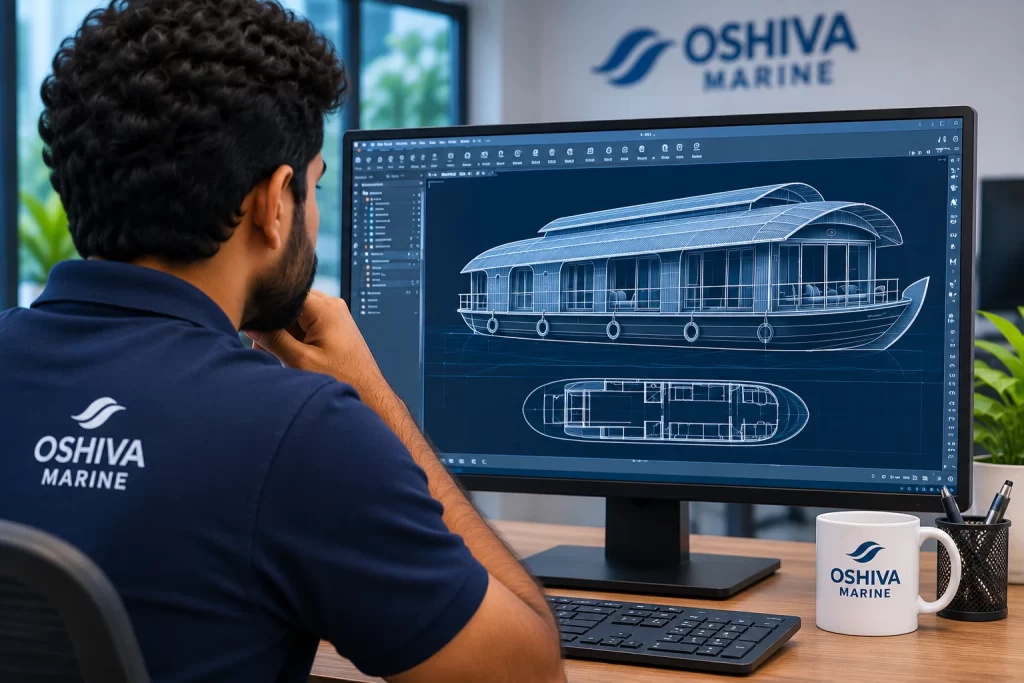
Planning and Design
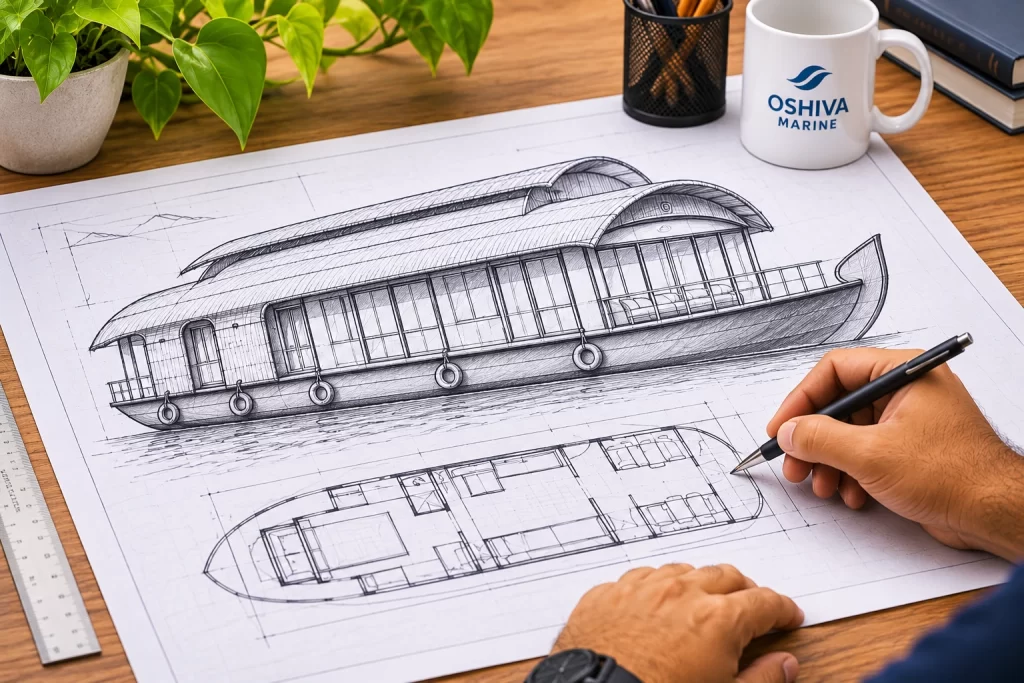
The very first step when it comes to building a boat is planning and designing. Planning goes into the initial decision-making of the type of boat they wish to construct and for what purpose. Prior to actual construction, the manufacturer should have a clear idea as to what type of boat he is going to build and what will be the purpose of the boat. Because you will require enough space to bring along a fishing outfit for a fishing boat, or some comfort in seating aboard a passenger boat.
Computer-aided design (CAD) software is used to design shapes accurately, as well as to analyze how the boat will react when it’s in the water. Stability, strength and speed are also calculated by the engineers using formulas. Careful planning avoids costly mistakes and takes the finished boat to the destination according to schedule. The Boat Manufacturing Process begins with this important stage, ensuring that different types of boats are designed according to their intended purpose. Proper planning and design help make the Boat Manufacturing Process more efficient and ensure the final boat meets its functional requirements.
Step 2: Choosing the Effective Materials
After the design of the boat has been determined, the manufacturing company selects which materials they are going to use to build the boat. Some of the primary materials used in the Boat Manufacturing Process are: Some of the materials that you are likely to use in building boat projects are:
Fiberglass: Strong, durable, and corrosion resistant, used in creating recreational and motorized boats.
Wood: Wood is an ancient matter and is used in the manufacturing of fishing, sailing, and customized boats, which require special care and maintenance so that they do not get affected.
Aluminum: Aluminum is lightweight and robust enough to manufacture fishing and rescue boats.
Steel: Steel is robust for large boats.
Composite: A combination of carbon fiber and resin used to construct boats. Selecting the right materials is an essential part of the Boat Manufacturing Process, as each material affects the boat’s strength, durability, and performance.
Step 3: Preparing the Manufacturing Facility
When all the design and materials requirements have been set up, then the manufacturing site is set up. Depending on the size of the boat, construction could be carried out at a small workshop, a dedicated manufacturing plant, or even a huge shipyard. The workers will set up all the necessary equipment, tools, molds, cutting equipment, and protective gear. The material is then measured out and placed in the manner prescribed by the construction drawings.
When building boats made from fiberglass, the manufacturer could develop a uniquely shaped mold, which would give shape to the exterior of the hull. With wooden and metallic boats, the workers could put together the frame, the template, and the cutting pattern. This provides a very organized work environment, which increases efficiency and ensures consistency in the Boat Manufacturing Process.
Step 4: Building the Boat's Hull
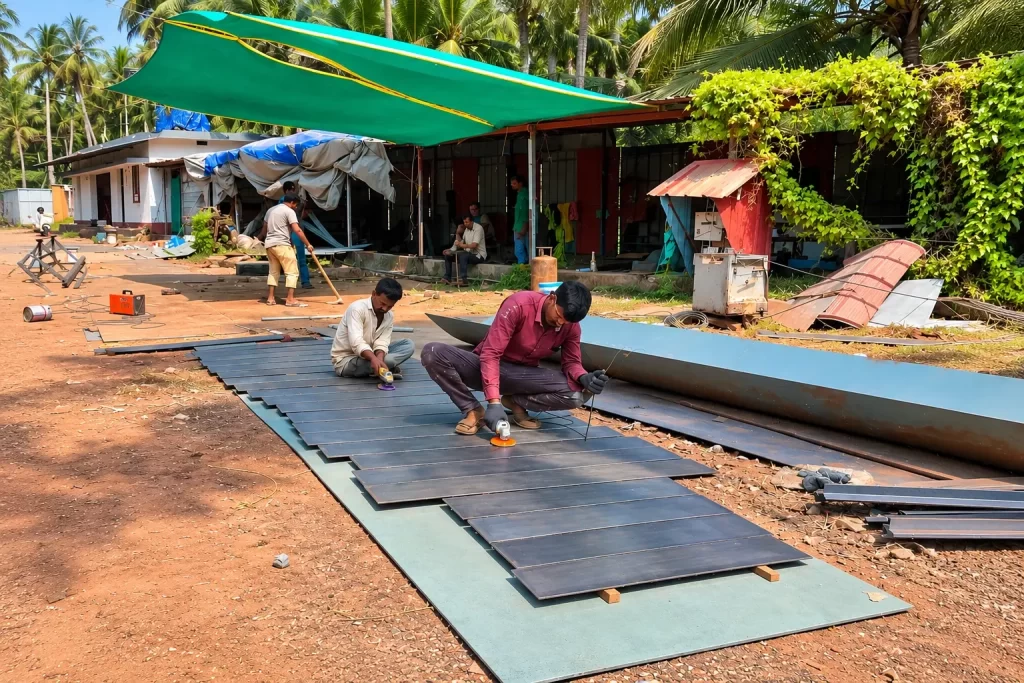
The hull is an important component of any ship. The hull is the main structure of the ship, which carries the weight of the ship and navigates it through water. The shape of the hull affects many parameters like buoyancy, stability, speed, efficiency in using fuel, etc. Hence, the hull of the boat is constructed based on exact engineering calculations as part of the Boat Manufacturing Process.
This is done taking into account the type of material that the boat is made of.
In case of fiberglass boats: Release agents are applied to the mold first. Then, layers of fiberglass reinforcements and resins are added to create a strong shell. In some cases, vacuum-assisted technology is used for the construction.
In the case of wooden boats: A framework is created, and then wooden planks or marine plywood are nailed to create the hull.
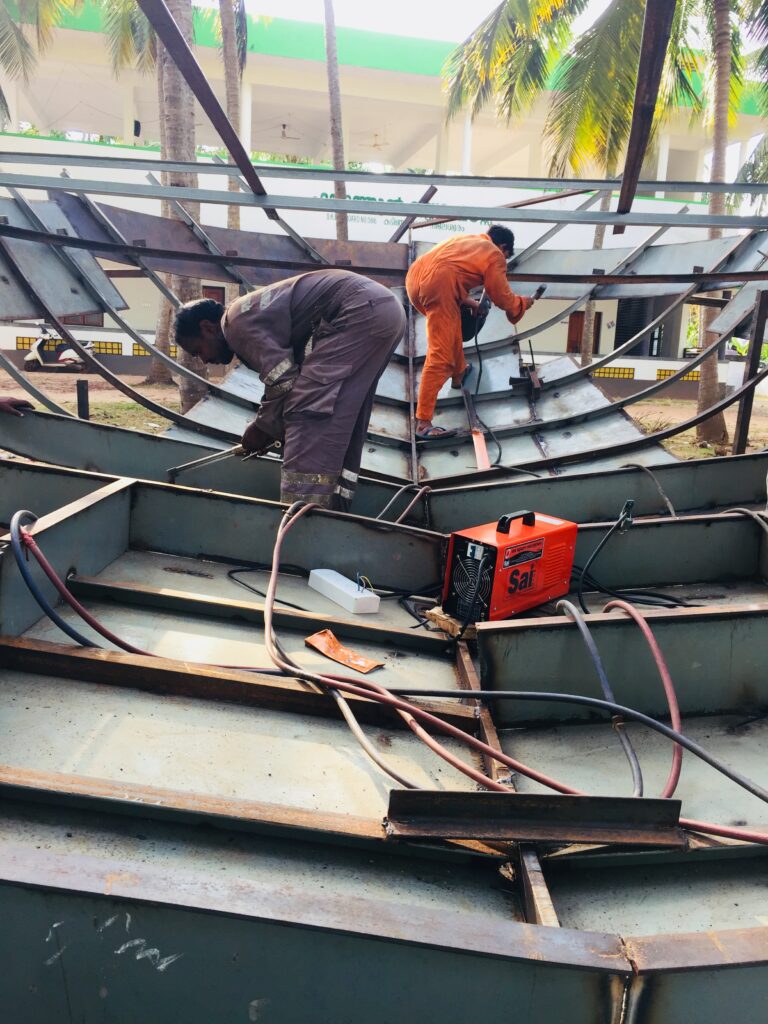
In case of aluminum and steel boats: Sheets of metal are cut, molded, and attached to each other to make the hull of the boat. Welding is a common technique used in such cases.
After construction, the hull is inspected for various flaws to ensure quality and safety throughout the Boat Manufacturing Process.
Step 5: Installing the Structural Framework
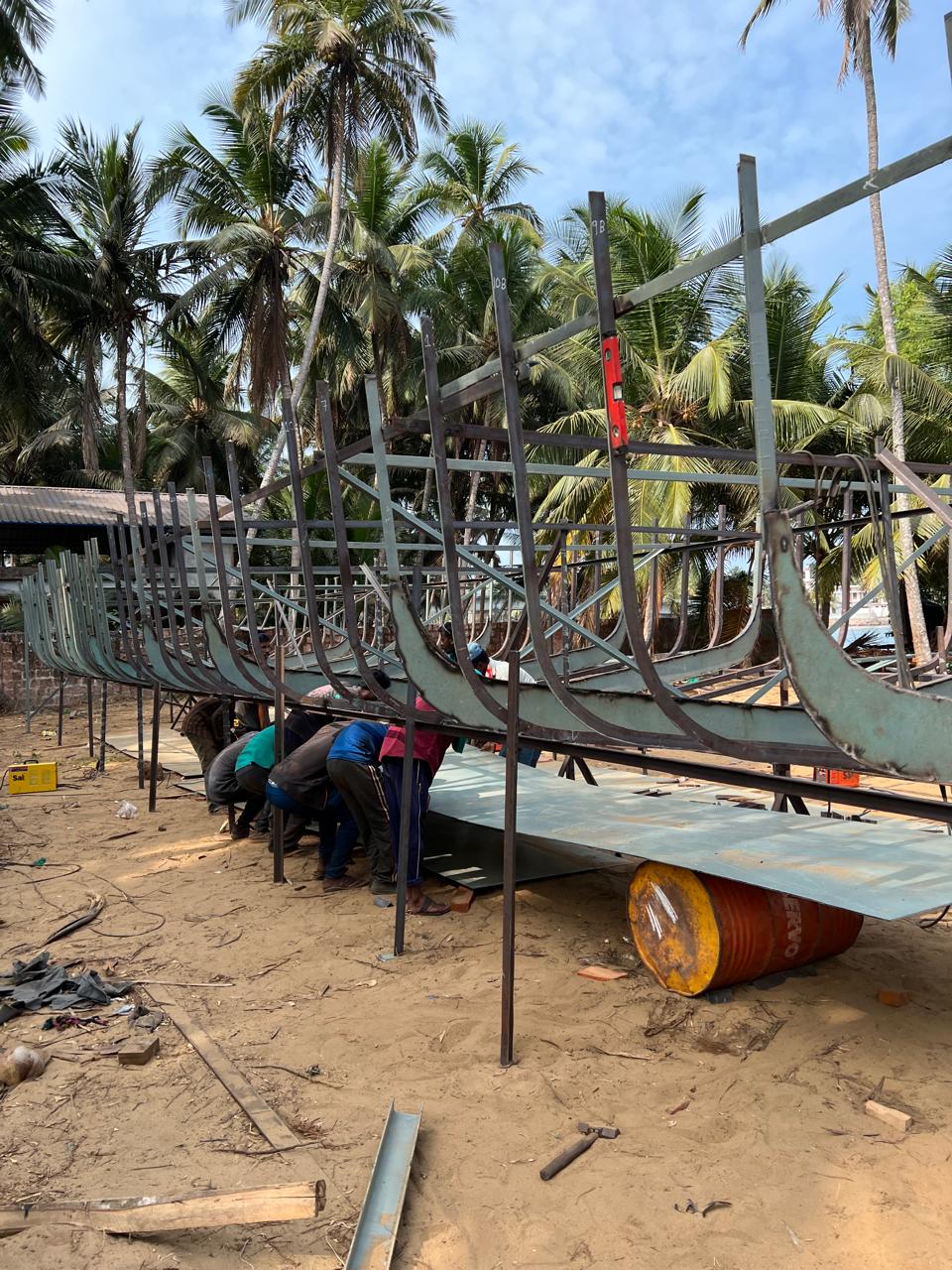
As soon as the hull’s rough build has been completed, you may go ahead and add your interior framing and supports as you have planned. The interior pieces could be, but are not limited to, these bulkheads, ribs, stringers, beams, or any other type of panel that can help support the boat.
They are going to aid in the hull strengthening and distribute the load. Bulkheads are internal barriers that allow the boat to be divided into separate compartments. May add to the strength of the build and could potentially reduce the effect of any flooding. Correct positioning of the frame is essential, because it will be used to support the equipment and the other elements situated inside the hull. This stage is an important part of the Boat Manufacturing Process, ensuring the boat has the required structural strength and support. Proper framing and support installation help make the Boat Manufacturing Process reliable and ensure the boat is built to handle its intended conditions.
Step 6: Adding the Deck and Interior Structure
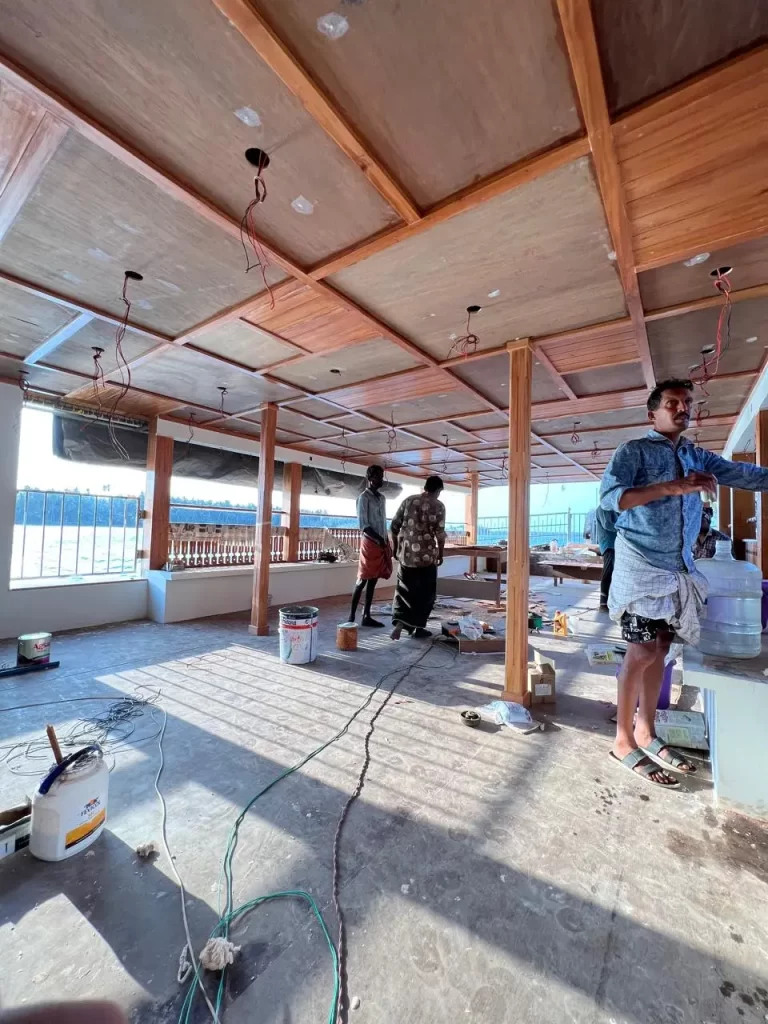
After the construction of the hull and frame, the next stage in the Boat Manufacturing Process would be the construction of the deck and other internal components of the ship. The deck will serve as the platform where the passengers, crew, and cargo will operate from. Depending on the nature of the boat, the manufacturer may incorporate amenities like seats, storage units, and living quarters, among others.
Some small boats have an open deck, while big yachts and ships can be designed with more than one deck as well as interior rooms. Appropriate materials are chosen to construct the floor, walls, and interiors of the boat. Additionally, workers make cutouts for windows, doors, hatchways, and access points during this stage. The deck and interior sections are then fastened firmly to the main structure.
Step 7: Installing the Engine and Mechanical Systems
In the case of motorized boats, fitting the propulsion system is one of the most important stages of the Boat Manufacturing Process. The engine is responsible for producing the necessary power for movement of the vessel in the water.
The kind of engine that is installed will be determined by the kind of boat being constructed.
Engine installation is very tight, and it will be connected with appropriate methods of propulsion like propellers or drives. Furthermore, other mechanical installations will be put in place, namely:
Fuel tanks and fuel pipes.
Cooling system.
Exhaust system.
Steering system.
Bilge pump for excess water removal.
Proper installation of these components ensures reliable engine performance and smooth operation throughout the Boat Manufacturing Process.
Step 8: Installing Electrical and Navigation Equipment
Your method of inspecting the boat will vary based on what construction it is, the materials used, and relevant health and safety legislation. As part of the Boat Manufacturing Process, the manufacturer will also have carried out tests on the steering system so that you can turn the boat freely and it reacts to commands correctly. These inspections ensure the boat meets the required safety and performance standards before delivery.
Step 9: Applying Surface Finishes and Protective Coatings
After the main construction and fitting of equipment work is completed, the boat is said to be finished. This is one of the final stages of the Boat Manufacturing Process.
The deck and hull have been washed and scrubbed and sanded if required, and we are prepared to apply a coat of paint to protect the substrate.
They serve to prevent access to moisture, corrosion, and other natural effects to prevent problems in the boat.
Metal boats may require additional corrosion-protection steps. Fiberglass boats can be gelcoated. Wood boats might require protective finishes and sealants.
The interior is trimmed out, with carpet, flooring, fixtures, and decorative details.
Doors, windows, chairs, hand rails, and storage areas are now being checked by manufacturers.
Step 10: Conducting Quality and Safety Inspections
Before the boat is delivered to its owner, it has to pass a lot of quality inspections.
The hull is checked out by the inspector. The deck, the engine, the electrical system, the steering, the safety gear, and the hull and structural joints are all checked.
checking fuel lines and electrical connections.
confirming the installation of the navigation lights.
Step 11: Testing the Boat in Water
Once the boat is constructed, it is floated on the water to make sure the boat performs as expected. As part of the Boat Manufacturing Process, initial tests will include checking a boat’s hull to ensure it is watertight and isn’t leaking. We ensure the engine and steering system are correctly maintained to smoothly operate and respond effectively in the right way.
Every component, like the fan belt, fuel system, power steering system, and other electrical connectors, is also checked for faults by our manufacturer.
In the water test, the team watches the boat handle and turn as it moves and gets a feel for it. They look at everything from the lights and navigation to the safety features of the boat to make sure it is working properly. If there is a problem, they get it fixed up so it is all set for the owner.
Step 12: Final Approval and Delivery
After the boat has successfully gone through all the required tests, the last stage of the Boat Manufacturing Process is to get the vessel ready for delivery. The boat manufacturer compiles everything that is required, like inspection reports, user manuals, and guarantee and maintenance instructions. Some registration papers and safety certificates may also be essential, based on the sort of boat and the location of operation.
The manufacturer may demonstrate to the owner how the boat works and tell them what they need to do to care for the engine, inspect their safety gear, and do minor maintenance before the boat is handed over to the owner or shipped to a destination.
But it’s not too late when heading out on the first boat trip of the year, as long as the boat suffers a minor ding or two. Regular maintenance, including hosing the boat, taking care of the motor, and checking the hull, electrical, and other systems, can prevent costly problems and prolong boat life.
Conclusion
But, in the end, it is all about designing a boat for the job, and it will perform on the water. The Boat Manufacturing Process requires a group of individuals, including designers, engineers, welders, and skilled workers. It’s their experience and effort that can transform the raw materials into a working product.
New technologies and materials are being introduced, meaning manufacturers can find improved ways of increasing performance, decreasing fuel usage, and looking after the environment. These advancements are improving the Boat Manufacturing Process, allowing boats to be made more efficiently and sustainably so they can meet the requirements of the future.